This content was aggregated from local dealer data and insights provided by the USA Today Network Automotive Insights team using Google Gemini and the Vehicles For Sale Near Arizona Republic Edition marketplace writing team.
2027 Chevrolet Traverse Fuel Economy Guide for Queen Creek and San Tan Valley Drivers
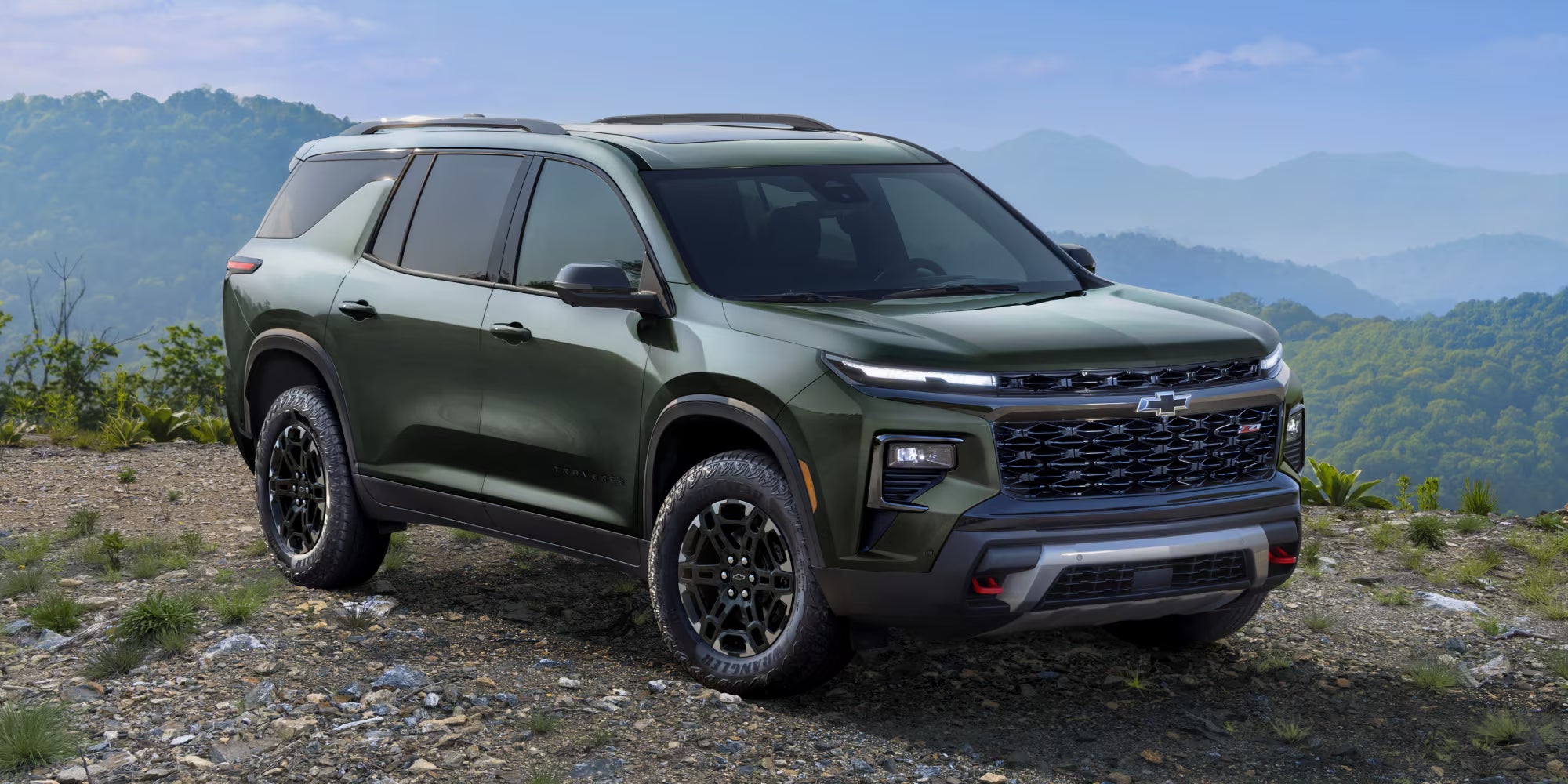
The 2027 Chevrolet Traverse earns an EPA-estimated 20 city/26 highway MPG with FWD and 20 city/24 highway MPG with AWD, while actual fuel consumption varies with everyday driving conditions. This guide from Earnhardt Chevrolet in Queen Creek, AZ, helps San Tan Valley, AZ, understand what affects this capable SUV's gas mileage.
What Is the 2027 Chevrolet Traverse's EPA Fuel Economy?
The 2027 Chevrolet Traverse is powered by a 2.5L turbocharged four-cylinder gasoline engine paired with an eight-speed automatic transmission. This powertrain is designed to provide a balance of performance and efficiency for daily commutes and longer journeys. It uses regular gasoline and is available in both Front-Wheel Drive (FWD) and All-Wheel Drive (AWD) configurations. It is important to note that the 2027 Chevrolet Traverse is a conventional gasoline-powered SUV, not a hybrid or plug-in hybrid. The Environmental Protection Agency (EPA) provides standardized fuel economy estimates to help consumers compare vehicles. For the 2027 Chevrolet Traverse, these estimates are:
FWD: 20 MPG city, 26 MPG highway, 22 MPG combined
AWD: 20 MPG city, 24 MPG highway, 21 MPG combined
These ratings represent results from controlled laboratory tests and are useful for comparison, but your actual mileage will vary depending on how and where you drive.
Why Does City Driving Affect Traverse Gas Mileage?
City driving often involves frequent stops, starts, and periods of idling, which can lead to lower fuel efficiency compared to highway driving. When driving the Chevy Traverse through neighborhoods with stop signs, navigating traffic lights, or waiting in school drop-off lines in Queen Creek or San Tan Valley, the engine repeatedly accelerates the vehicle from a standstill. This acceleration requires a significant amount of energy and fuel. Idling, such as during traffic jams or at a long stoplight, consumes fuel without adding any distance traveled. Short trips, where the engine may not fully warm up, can also be less efficient. To help mitigate this, the 2027 Chevrolet Traverse includes engine stop-start technology. When operating conditions permit, this system can temporarily shut off the engine during certain stops and restart it smoothly when you release the brake pedal. This feature helps reduce unnecessary fuel consumption while the vehicle is stopped, contributing to better city MPG.
What MPG Can Drivers Expect During Highway Travel?
On the highway, drivers of the 2027 Chevrolet Traverse generally experience better fuel economy than in city conditions. This is because steady highway driving involves fewer full stops and less repeated acceleration. When taking longer trips from Queen Creek or San Tan Valley toward Phoenix-area destinations, maintaining reasonably steady speeds and anticipating traffic changes can optimize your Chevy Traverse's efficiency. Avoiding sudden, hard acceleration and braking also helps. While higher speeds can reduce travel time, it is important to remember that very high speeds increase aerodynamic resistance, which can cause fuel consumption to rise. Keeping unnecessary heavy cargo out of your vehicle and ensuring your tires are properly inflated to the recommended pressure are also practical steps to support consistent highway fuel economy.
How Do FWD and AWD Affect the Traverse's Fuel Economy?
The drivetrain configuration is one of the factors that influences the EPA's published fuel economy estimates for the 2027 Chevrolet Traverse. Both Front-Wheel Drive (FWD) and All-Wheel Drive (AWD) configurations utilize the same 2.5L turbocharged four-cylinder gasoline engine and eight-speed automatic transmission, but their differing drivetrain arrangements result in slightly different efficiency ratings.
The official EPA ratings are:
FWD: 20 city, 26 highway, 22 combined MPG
AWD: 20 city, 24 highway, 21 combined MPG
As you can see, both configurations receive the same 20 MPG city estimate. However, the FWD configuration carries a higher published highway and combined fuel economy estimate. This difference is largely due to the additional components and weight associated with the AWD system, which can slightly increase drag and energy loss. Shoppers should evaluate their driving needs and the specific vehicle configuration that best suits them, rather than assuming one drivetrain is universally preferable in all real-world conditions.
Fuel Economy Comparison Table for the 2027 Chevrolet Traverse
2027 Traverse Drivetrain | EPA City MPG | EPA Highway MPG | EPA Combined MPG | Everyday Driving Consideration |
|---|---|---|---|---|
Front-Wheel Drive (FWD) | 20 | 26 | 22 | Actual results depend on driving conditions, vehicle load, road conditions, and driver behavior. |
All-Wheel Drive (AWD) | 20 | 24 | 21 | Actual results depend on driving conditions, vehicle load, road conditions, and driver behavior. |
How Can Arizona Drivers Get More Consistent Fuel Efficiency?
Arizona's climate, especially the intense summer heat in Queen Creek and San Tan Valley, can influence your 2027 Chevrolet Traverse's fuel economy. High outdoor temperatures often increase the demand on the air conditioning system. Running the air conditioning requires engine power, which can slightly increase fuel consumption, particularly during shorter trips and slower city driving. The impact varies based on temperature, sunlight, fan settings, traffic, and overall vehicle operating conditions.
Beyond climate, other factors like vehicle load and road conditions play a role. Carrying additional passengers, heavy luggage, or cargo can increase the vehicle's weight and thus its fuel consumption. Driving up hills or against strong winds also requires more energy from the engine. Maintaining appropriate tire pressure is critical; underinflated tires increase rolling resistance and reduce efficiency.
Practical Fuel-Economy Habits:
Adopting smart driving habits can help you achieve more consistent fuel efficiency in your 2027 Chevrolet Traverse:
Smooth Acceleration and Braking: Avoid sudden starts and hard stops. Gentle acceleration and gradual braking use less fuel.
Avoid Unnecessary Idling: If you anticipate a long stop, turning off your engine (when safe and permitted) can save fuel, especially when the engine stop-start system is not active.
Maintain Recommended Tire Inflation: Properly inflated tires improve fuel economy and safety. Check your tire pressure regularly.
Remove Unnecessary Weight: Take out any heavy items you don’t need to carry regularly.
Follow Chevrolet's Maintenance Recommendations: Regular service, including oil changes and air filter replacements, keeps your engine running efficiently.
Use Cruise Control: On highways, cruise control can help maintain a steady speed and avoid unnecessary acceleration and deceleration.
Combine Errands: Planning your trips to combine multiple errands into one journey reduces the number of cold starts and short-distance driving, which are less efficient.
Monitor Fuel Economy: Pay attention to your average MPG over time to understand how your driving habits and conditions affect your vehicle's efficiency.
Why Buy From Earnhardt Chevrolet?
For shoppers in Queen Creek, AZ, and San Tan Valley, AZ, Earnhardt Chevrolet is your trusted source for the 2027 Chevrolet Traverse. Our team is ready to help you review the available configurations of the chevy traverse and compare the published EPA ratings to find the perfect SUV for your needs. We are committed to providing you with accurate information and a straightforward buying experience.
FAQs
What is the 2027 Chevrolet Traverse's EPA-estimated MPG?
The 2027 Chevrolet Traverse with Front-Wheel Drive (FWD) has an EPA-estimated 20 city/26 highway MPG, while the All-Wheel Drive (AWD) version is rated at 20 city/24 highway MPG.Does the 2027 Chevrolet Traverse get better gas mileage on the highway?
Yes, the 2027 Chevrolet Traverse generally achieves better fuel economy on the highway compared to city driving. This is due to more consistent speeds and fewer stops and starts.Is the 2027 Traverse's city MPG different between FWD and AWD?
No, both the FWD and AWD configurations of the 2027 Chevrolet Traverse share the same EPA-estimated 20 MPG for city driving. The difference in MPG appears in the highway and combined ratings.How does Arizona summer heat affect the Traverse's fuel economy?
Arizona's high summer temperatures can increase the use of the air conditioning system, which requires engine power and can slightly reduce the 2027 Chevrolet Traverse's fuel economy, especially during shorter trips and slower driving.What driving habits can help improve the 2027 Traverse's real-world MPG?
To improve your 2027 Chevrolet Traverse's real-world MPG, practice smooth acceleration and braking, avoid unnecessary idling, maintain proper tire pressure, remove excess cargo, follow recommended maintenance schedules, and use cruise control when appropriate.
Written for Earnhardt Chevrolet
By the USA TODAY Network Automotive Insights Team, in collaboration with https://vehiclesforsalenearphoenix.com/ and the Vehicles For Sale Near Arizona Republic Edition.
Disclaimer: This article's content is intended for informational purposes only. Vehicle specifications and features are based on data provided by J.D. Power and local dealerships and may vary by individual vehicle, VIN, trim, configuration, packages, and optional equipment. Vehicle images may not depict the exact model, trim, features, packages, accessories, or specifications described. Vehicle pricing, availability, features, and specifications are subject to change without notice. Please reference the dealership's vehicle listing and window sticker or consult the dealership directly for complete and accurate details.